THE 1619 LANDING
MEMORIAL WEEK — FORT MONROE
August 1619: What We Actually Know About the Landing at Point Comfort — and Why a Memorial Is About to Rise Where It Happened
By Prodigal Breaking News
August 20, 2026
A deep dive into the arrival of the first Africans in English North America, the historical debate over the exact date, and the commemoration week now underway in Hampton, Virginia.
Four hundred and seven years ago this month, a ship sailed into the mouth of the Chesapeake Bay and changed the course of a continent. Or maybe it didn't. The story of "1619" has been told so many times, in so many ways, that the actual history has nearly been buried under the mythology. This week, Hampton, Virginia is trying to dig it back out — and to build something permanent on top of it.
Here is what we actually know, what we only think we know, and what a week of commemoration at Fort Monroe is meant to set straight.
What happened at Point Comfort in August 1619
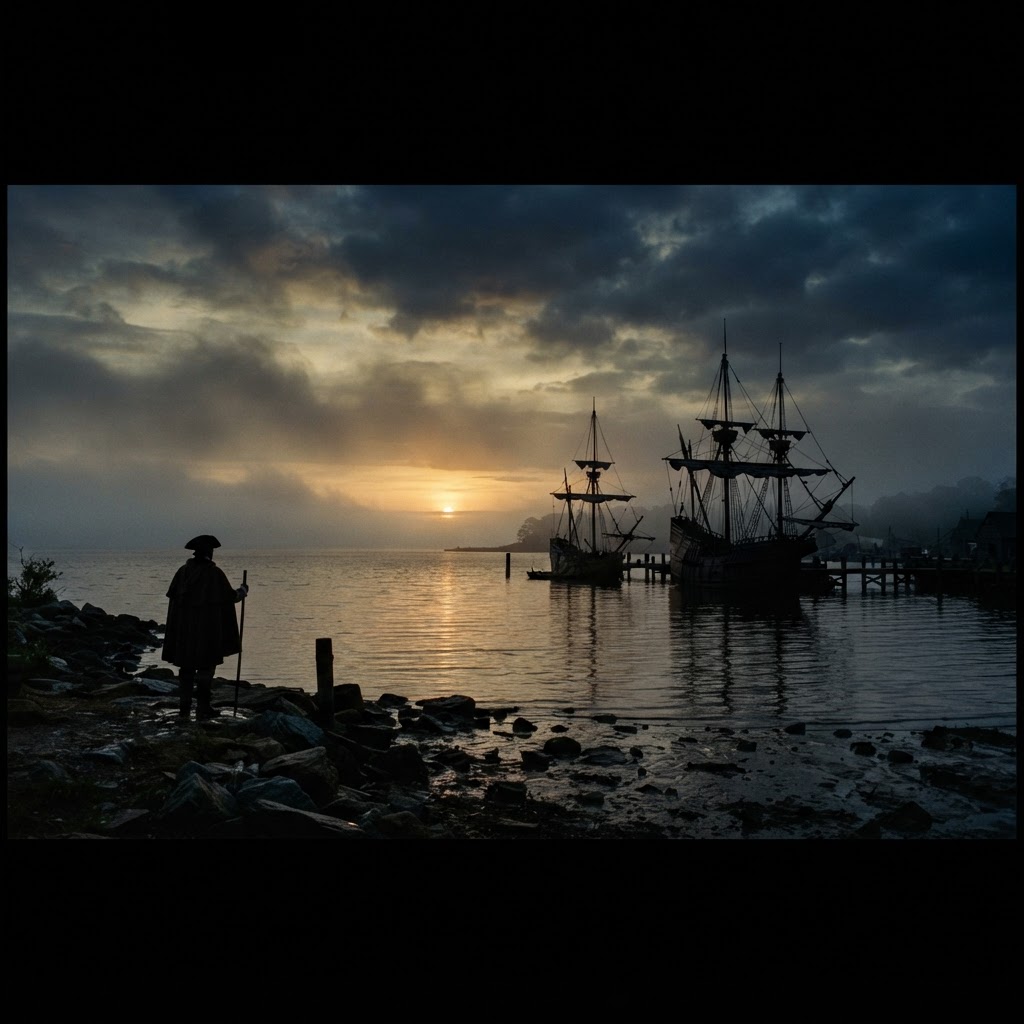
In the closing days of August 1619, an English privateer called the White Lion arrived at Point Comfort, a narrow spit of land at the entrance to the Chesapeake Bay where the English had built a small fort. The ship was carrying between 20 and 30 Africans who had been seized days earlier from a Portuguese slave vessel, the São João Bautista, bound for the Spanish colony of Veracruz. The White Lion's crew traded the captives to Virginia's colonists for food and supplies.
The people aboard the White Lion were not the first Africans to set foot on the land that became the United States. But their arrival is the first documented landing of Africans in English North America, and it is the moment the English colonies began the transition from a society with enslaved labor to a society organized around chattel slavery.
Among the Africans who arrived in those early years were a woman and a man listed in the colony's 1624 and 1625 census as Isabella and Antoney. Their son, William Tucker, baptized in 1624, is widely cited as the first African child born in English North America. They were given the surname of the captain who owned them — a small, brutal detail that tells you most of what you need to know about the world they had been forced into.
The date no one can nail down
Ask when the landing happened and you will get a different answer depending on where you look. The only near-contemporary account is a letter the colonist John Rolfe wrote to Edwin Sandys in January 1620, in which Rolfe placed the arrival "about the latter end of August." That phrase has been doing a lot of work for four centuries.
Some historians fix the landing on August 20. Others argue for August 25. The National Park Service, which now administers Fort Monroe, has used "late August." No surviving document — no logbook, no manifest, no diary — records the exact day. The precision that commemoration demands is something the historical record simply does not provide, and the honest answer is that the date was lost in the same waters the White Lion sailed in on.
The bigger myth: 1619 was not "the beginning of slavery in America"
If you learned one thing about 1619 in school, it was probably that it marked "the beginning of slavery in America." It did not. Enslaved Africans arrived in what is now the United States more than fifty years earlier, in 1565, when the Spanish founded St. Augustine in Florida and brought enslaved people with them to build and defend the colony. Spanish Florida relied on enslaved African labor for generations before the English planted their first flag at Jamestown.
What 1619 did mark was the beginning of the English colonies' entanglement with the Atlantic slave trade — the seed of the system that would, over the next two centuries, become the foundational economic engine of the British colonies and then of the early American republic. That distinction matters. The 1619 landing did not invent slavery on this continent. It began the specific English version of it, the version that would grow into the largest forced migration in recorded history and the legal and economic architecture of American slavery.
The irony of "Freedom's Fortress"
There is a second history layered on top of the first, and it is the reason the site matters beyond 1619. The same spit of land where the White Lion landed became, two and a half centuries later, one of the most important places of liberation in American history.
In May 1861, three enslaved men — Frank Baker, Shepard Mallory, and James Townsend — rowed across the harbor to Fort Monroe, which the Union still held at the start of the Civil War. The Union commander, General Benjamin Butler, refused to return them to the Confederacy. He declared them "contraband of war." Within months, thousands of enslaved people had made the same crossing, and the fort earned the name it carries to this day: Freedom's Fortress.
So the ground where the English colonies took their first real step into chattel slavery is also the ground where the first cracks in that system appeared. The memorial rising there now sits on both histories at once.
This week at Fort Monroe: August 22–29
Hampton's commemoration runs from August 22 through August 29, 2026, and it ends with the national unveiling of the permanent African Landing Memorial — a structure that has been in the planning and fundraising stages for years and is now being installed at the water's edge at Fort Monroe, within sight of where the White Lion is believed to have come ashore.
The week includes historical walking tours of Point Comfort, lectures from historians of the early Atlantic world, a remembrance ceremony honoring the Africans who arrived in 1619, and a series of community conversations about the site's dual legacy — a place of arrival and, later, of escape. The closing ceremony on August 29 is expected to draw descendants of some of the families first recorded at the site, including families tracing lineage to William Tucker.
The goal, the organizers say, is not to settle the date or to resolve the mythology. It is to make sure the ground itself remembers.
Sources
Process This Deeper
Prodigal AI's Story Companion Guide explores the institutional pattern, consciousness framework, community insights, transformation practices, and action opportunities related to this story.
Open the Companion Guide