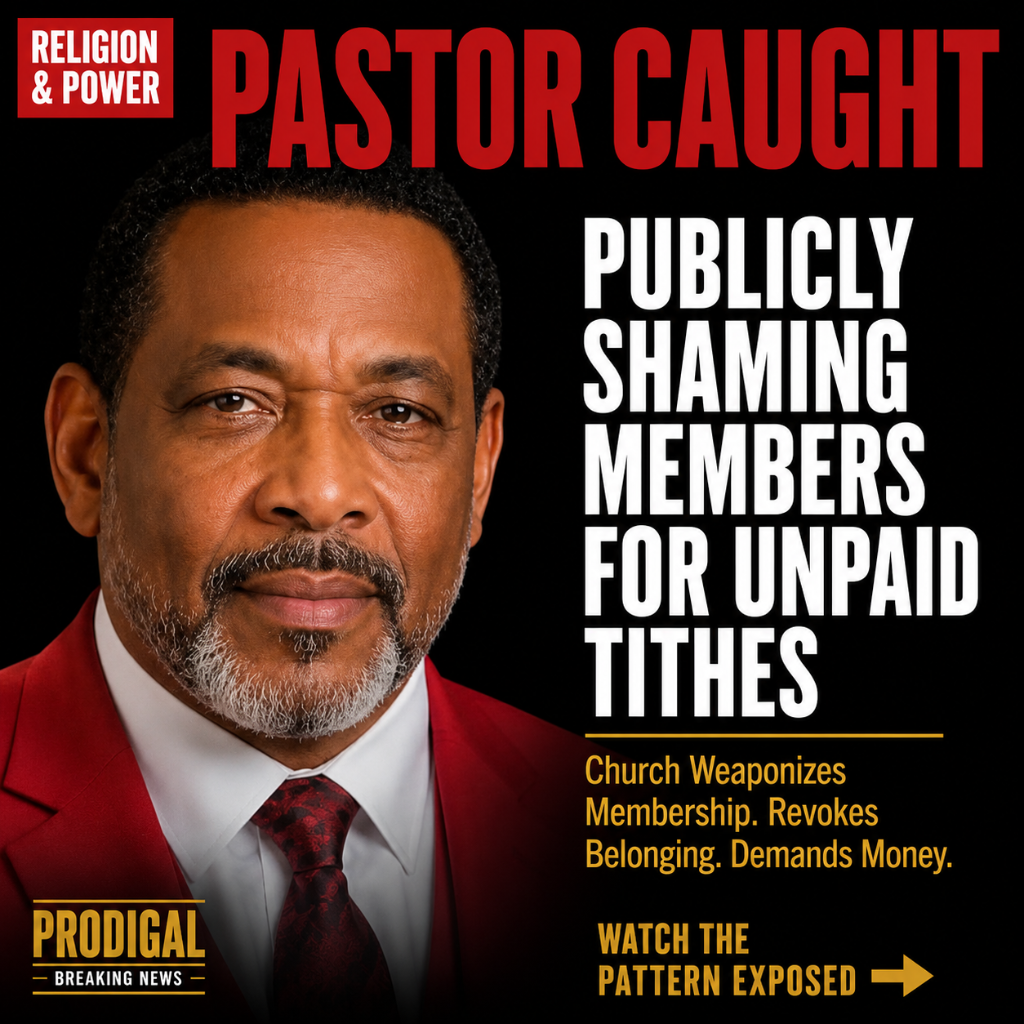
BISHOP DR. THEODIS STEWART — MISSISSIPPI CHURCH PUBLICLY SHAMES MEMBERS FOR UNPAID TITHES; WEAPONIZES MEMBERSHIP AS FINANCIAL ENFORCEMENT
Religion & Power
BISHOP DR. THEODIS STEWART — MISSISSIPPI CHURCH PUBLICLY SHAMES MEMBERS FOR UNPAID TITHES; WEAPONIZES MEMBERSHIP AS FINANCIAL ENFORCEMENT
By LATISHA SKY — Human Interest Anchor
July 8, 2026
Bishop Dr. Theodis Stewart's church in Mississippi publicly listed members who allegedly failed to pay tithes, revoked their memberships, and deactivated its Facebook page after screenshots went viral. The church claimed it had "previously contacted them privately" and offered automatic bank drafts for recurring tithes. This is institutional power using shame and exclusion as financial enforcement mechanisms. Membership — belonging — is weaponized. Compliance is demanded. Non-compliance is publicly humiliated. The institution controls narrative by hiding.
Here's what institutional control looks like when it's desperate: A church in Mississippi run by Bishop Dr. Theodis Stewart posted a public announcement on Facebook. The post listed church members by name. Under each name, the church indicated that the member's "membership has been revoked" due to "failed tithes." The church added: We have previously contacted you privately. We even offered automatic bank drafts so you wouldn't have to remember. Then they deleted the evidence. But screenshots had already spread online. And now people are asking the question the church never wanted asked: What gives a church the right to publicly shame members for not giving them money? Here's the institutional architecture: Step 1 — Create dependency. Belonging to a church means belonging to community, family, spiritual home. It means connection. It means you're part of something bigger than yourself. For many people, church is the primary source of community, especially in rural Mississippi. Membership isn't just religious. It's social. It's where you find your people. Step 2 — Monetize belonging. Now the church says: This community costs money. Tithes. Financial support. If you're part of us, you pay. For people whose entire support system is the church, this creates a bind. Leave the church and you lose community. Stay and you're obligated financially. Step 3 — Deploy shame as enforcement. When people can't pay — because they're unemployed, disabled, struggling, poor — the church doesn't say "Let's talk about this." It doesn't say "How can we help?" It says: Your membership is revoked. And we're telling everyone why. Public humiliation. Public announcement. Public enforcement. The message is clear: Comply or be expelled. Pay or be shamed. Give us money or lose your community. Step 4 — Justify the abuse. When the screenshots go viral, the church's defense is: "We contacted them privately first. We offered convenience. We're not monsters. We're just enforcing membership standards." But notice what's hidden: the real reason for membership revocation isn't spiritual. It's financial. The church didn't list people for theological disagreement or moral failure. It listed people for not paying money. Step 5 — Erase the evidence. Facebook page deactivated. Screenshots circulating, but the original evidence is gone. The church can now claim the posts were misrepresented, taken out of context, exaggerated. The institution controls the narrative by hiding. Here's what this reveals about institutional religion: When belonging is monetized, shame becomes a tool. When community is weaponized as leverage, exclusion becomes policy. When financial compliance is enforced through public humiliation, you're not looking at a church. You're looking at a system designed to extract money from vulnerable people by threatening their access to community. The defense is always the same: "We tried to be reasonable. We offered payment plans. They chose not to comply." But that's not how you talk about community. That's not how you talk about family. That's how you talk about debtors. And that's the pattern worth noticing: When religious institutions start talking like debt collectors, when they publicly humiliate members for financial non-compliance, when they revoke membership — which is to say, expel people from community — they've revealed what they really are. Not spiritual leaders. Financial operators. Bishop Theodis Stewart's church didn't just enforce tithes. It enforced them publicly. It weaponized membership. It used shame as a collection tool. And when exposed, it disappeared. This is institutional machinery at work. This is what happens when belonging gets monetized. This is what exclusion looks like when it's packaged as spiritual discipline. Notice The Pattern. 📩 Full deep dive, sources, and analysis: https://substack.com/@prodigalbreakingnews — Don Jackson, Prodigal Breaking News 👁 YouTube: https://www.youtube.com/@ProdigalBreakingNews 👁 TikTok: https://www.tiktok.com/@prodigalbreakingnews 👁 Instagram: https://www.instagram.com/prodigalbreakingnews/ 👁 Substack: https://substack.com/@prodigalbreakingnews
Process This Deeper
Prodigal AI's Story Companion Guide explores the institutional pattern, consciousness framework, community insights, transformation practices, and action opportunities related to this story.
Open the Companion Guide